Insomnia is not just a bad night here and there. For many adults, it becomes a loop: the body feels tired, the mind stays alert, bedtime turns into a performance test, and the harder a person tries to sleep, the less natural sleep feels. That is why many people start looking beyond generic sleep tips and ask whether a gentler, more individualized approach could help. One option that comes up in integrative care is Japanese Hari style acupuncture.
Japanese Hari style acupuncture is usually described as a refined, low-force form of acupuncture that emphasizes touch, careful palpation, light stimulation, and a calm treatment experience. In practice, that often means thinner needles, shallower insertion, and closer attention to how the nervous system responds during the session. For a person whose insomnia feels tied to hyperarousal, tension, jaw clenching, stress, a “tired but wired” state, or sensitivity to stronger interventions, this style may sound appealing.
Still, it is important to be honest from the start: Japanese Hari style acupuncture is not a miracle cure for insomnia, and it is not the first-line treatment recommended by major sleep guidelines. Cognitive behavioral therapy for insomnia, or CBT-I, remains the leading evidence-based treatment for chronic insomnia. Medication can also play a role in selected situations. One of the best-known prescription sleep drugs is Ambien, the brand name for zolpidem, which is sometimes used for short-term relief of sleep-onset insomnia. But Ambien also carries meaningful safety concerns, including next-day impairment and complex sleep behaviors, so it should never be treated casually.
This article takes a practical, evidence-aware look at where Japanese Hari style acupuncture may fit in a modern insomnia plan. The goal is not to oversell it, and not to dismiss it. The goal is to show what it is, who might consider it, what the research does and does not say, how it compares with standard insomnia treatment, and where Ambien may fit when a clinician decides medication is appropriate.

What Insomnia Really Means
Insomnia is often simplified into one question: “Can you sleep?” Real insomnia is broader than that. A person may have trouble falling asleep, trouble staying asleep, repeated early waking, or sleep that feels thin and unrefreshing even when the clock says enough hours passed. Daytime effects matter too. Irritability, slowed thinking, poor concentration, increased pain sensitivity, low frustration tolerance, and anxiety about the next night are all part of the picture.
Acute insomnia can develop during travel, grief, illness, schedule disruption, or a stressful life event. Chronic insomnia is different. It tends to continue for months, often because the original trigger is no longer the only issue. The brain starts learning wakefulness in the sleep environment. The bed becomes associated with scanning, problem-solving, frustration, and clock-watching. A person may start compensating by sleeping late, napping, canceling evening plans, using alcohol, or relying on rescue remedies in a way that keeps the cycle alive.
That is one reason simplistic advice can backfire. “Just relax” is not a treatment. Neither is “go to bed earlier.” Chronic insomnia usually needs a structured plan. Sometimes that plan is fully behavioral. Sometimes it includes medication for a short period. Sometimes it also includes adjunctive therapies such as acupuncture, meditation, relaxation work, or body-based strategies that reduce the sense of internal threat at bedtime.
What Japanese Hari Style Acupuncture Is
The phrase “Japanese Hari style acupuncture” usually points to a Japanese meridian-based tradition that values subtlety over intensity. Compared with more forceful needling styles, Japanese approaches are often associated with thinner needles, shallow insertion, the use of a guide tube for gentle placement, repeated palpation of the pulse and abdomen, and close feedback from the body during treatment. Some practitioners may also use contact needling or non-insertive tools in parts of a session, especially when the patient is very sensitive, anxious, exhausted, or new to acupuncture.
That matters for insomnia because the treatment experience itself can shape whether a patient feels safe enough to settle. A person who already lives in a state of sensory overload may not want a strongly stimulating session. Hari-style treatment is often chosen by patients who prefer a quieter therapeutic input: fewer needles, gentler sensation, and a slower pace. In plain language, it is often marketed as a softer form of acupuncture. Whether that gentleness translates into better sleep depends on the individual, the skill of the practitioner, and the larger treatment plan around it.
Another distinguishing feature is the emphasis on pattern recognition through touch. In Japanese systems, palpation is not an afterthought. The practitioner may evaluate the abdomen, pulse, temperature shifts, tissue tone, tenderness, and subtle changes in the body before, during, and after needling. For insomnia patients, that can make the encounter feel more individualized than a fixed-point protocol built around a generic “sleep treatment.”
Why People With Insomnia Are Drawn to It
Not every insomnia story is the same. Some people have a classic stress pattern: racing thoughts, shallow breathing, tight shoulders, clenching at night, and a second wind around bedtime. Others feel physically tired but mentally vigilant, as if their nervous system forgot how to disengage. Some wake at 2:00 or 3:00 a.m. with pounding thoughts and cannot return to sleep. Others have sleep disruption layered onto chronic pain, perimenopause, headaches, digestive discomfort, grief, or medication changes.
Japanese Hari style acupuncture appeals to this group because it fits the logic of low-intensity nervous system regulation. People are often not searching for a knockout effect. They want their system to feel less braced. They want fewer internal alarms. They want bedtime to stop feeling like a battle. In that setting, a gentle acupuncture approach may feel more compatible with the actual problem than a purely sedating strategy.
What the Evidence Says, Without the Hype
This is the section where many wellness articles get slippery. The honest summary is more modest. Major sleep medicine guidance still places CBT-I at the center of treatment for chronic insomnia. That is because CBT-I directly addresses the learned behaviors and thought patterns that keep insomnia going. Modern guidelines also caution against using sleep hygiene by itself as a stand-alone treatment for chronic insomnia. Good habits matter, but habits alone usually do not undo a conditioned insomnia cycle.
Acupuncture research for insomnia is more mixed. Some reviews suggest that acupuncture may improve sleep quality, reduce time to fall asleep, or decrease nighttime awakening in some patients. But many studies are small, heterogeneous, or methodologically weak. Different studies use different point selections, session frequencies, treatment durations, and control methods, which makes it hard to draw firm conclusions. In other words, the signal is interesting, but the evidence is not clean enough to sell acupuncture as a proven first-line cure.
That nuance is especially important with Japanese acupuncture. Research often studies “acupuncture” as a broad category, not this exact lineage-specific method. So even when a review finds a possible benefit from acupuncture for insomnia, it does not automatically prove that Hari-style treatment specifically is superior. A patient considering this approach should understand that the strongest argument for it is currently clinical plausibility, patient preference, tolerability, and adjunctive value, not definitive head-to-head proof against standard treatments.
A sensible way to frame it is this: Japanese Hari style acupuncture may be a reasonable adjunctive option for some adults with insomnia, especially when the sleep problem is linked with hyperarousal, stress, body tension, or a desire for a low-force integrative approach. But it should sit inside an evidence-based insomnia plan, not replace one.
How a Hari-Style Session May Support Sleep
Japanese Hari style may be particularly suited to people who respond better to subtle input than to intensity. In a typical session, the room is quiet, the needling is light, and the practitioner may adjust treatment based on ongoing tactile feedback. Some patients report that the benefit is less “I was knocked out” and more “my body stopped arguing with sleep.” That distinction matters. Good insomnia treatment is not only about sedation. It is about restoring the conditions in which sleep can happen.
Of course, response varies. Some people feel calmer the same night. Others notice only incremental change over several sessions. Some feel relaxed for a few hours but still need behavioral work to fix their sleep schedule. And some do not respond at all. That is why it helps to set a trial period in advance, such as four to eight sessions, paired with sleep tracking. Without a diary, people often remember the worst nights and miss the gradual gains.
Where Ambien Fits in the Conversation
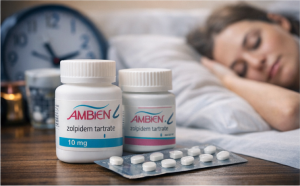 Ambien – zolpidem, is one of the most recognizable prescription insomnia medications in the United States. It is approved for the short-term treatment of insomnia characterized by difficulty with sleep initiation. In plain language, it is typically used when the main problem is falling asleep, not as a cure for every form of chronic sleep disruption. For some patients, it can reduce sleep latency and provide rapid relief during an especially difficult period.
But Ambien is not a casual sleep aid. It carries significant warnings. The FDA labeling highlights complex sleep behaviors such as sleepwalking, sleep-driving, preparing food, eating, making phone calls, or having sex while not fully awake, with no memory of the event the next morning. The label also stresses next-day impairment risk, especially at higher doses, and recommends using the lowest effective dose. Treatment is supposed to be as short as possible, with re-evaluation if symptoms continue.
Dosing also deserves attention. The current label recommends an initial dose of 5 mg for women and 5 or 10 mg for men, taken only once per night immediately before bedtime, with at least seven to eight hours available before planned awakening. The lower recommended starting dose for women reflects slower clearance and higher blood levels at the same dose. Older adults and people with hepatic impairment may need extra caution and lower dosing as well.
In practical insomnia care, Ambien may make sense when a clinician judges that short-term pharmacologic relief is needed, especially while a broader plan is being built. For example, a patient with severe sleep-onset insomnia, major work impairment, and escalating sleep anxiety may use medication briefly while starting CBT-I or stabilizing a disrupted schedule. That is very different from taking it indefinitely without reassessing the cause of insomnia.
Ambien also should not be mixed casually with alcohol, other sedatives, or “stacked” night remedies in an attempt to force sleep. The more chaotic the bedtime chemistry becomes, the less predictable and less safe the night becomes. For people interested in Japanese Hari style acupuncture, this matters because the goal is often to reduce the need for escalating bedtime rescue behaviors, not add another layer of improvisation.
Acupuncture and Ambien Are Not Opposites
Patients often frame the issue as a choice: natural or pharmaceutical, acupuncture or medication, holistic or conventional. Real sleep medicine is usually more pragmatic. A person may use Ambien for a short, clinician-guided interval while also pursuing a nonpharmacologic strategy aimed at more durable change. A person may start with acupuncture because they prefer a lower-force intervention, then later decide with their clinician that medication is warranted. Another patient may taper medication only after behavioral treatment and better daytime rhythm are in place.
That is one of the healthiest ways to think about Japanese Hari style acupuncture. Not as a purity test, but as one tool. If it helps a patient feel calmer, less defended, and more receptive to structured insomnia treatment, it may have real value even if it is not the main driver of change. If it does not help after a fair trial, that is useful information too.
The Best Use Case: A Combined Insomnia Plan
The strongest real-world plan is usually layered. First, the patient needs a proper evaluation. Insomnia is sometimes the visible symptom of something else: obstructive sleep apnea, restless legs syndrome, chronic pain, depression, anxiety disorders, trauma-related hypervigilance, thyroid dysfunction, medication effects, reflux, perimenopause, or irregular work schedules. Treating “insomnia” without checking these drivers can waste months.
Second, the patient needs a structured behavioral foundation. That usually includes a consistent wake time, sleep compression or restriction when appropriate, stimulus control, reduced clock-checking, realistic expectations about sleep, and a sleep diary. Morning light exposure, earlier caffeine cutoff, exercise timing, and reducing “trying too hard to sleep” behaviors often matter more than people expect.
Third, adjunctive tools can be layered based on patient fit. This is where Japanese Hari style acupuncture may belong. For the right patient, it can pair well with CBT-I, breathing exercises, a wind-down routine, body-based relaxation, and targeted treatment of pain or tension that is amplifying nighttime arousal. Some patients also benefit from addressing jaw tension, neck pain, headaches, digestive discomfort, or menopausal symptoms that make bedtime harder.
Medication, including Ambien, may be used selectively inside this framework rather than as the whole framework. When patients understand that distinction, outcomes are often better. The target shifts from “How do I sedate myself tonight?” to “How do I rebuild normal sleep over time?”
Safety and Red Flags
Acupuncture is generally considered safe when performed by a qualified practitioner using sterile needles, but it is still a medical-adjacent intervention and not risk-free. Improper technique can lead to infection, bleeding, bruising, or in rare cases more serious injury. Patients who are pregnant, immunocompromised, on anticoagulants, extremely needle-sensitive, or medically complex should disclose that information before treatment begins.
Insomnia itself also has red flags. Loud snoring, witnessed apneas, gasping awakenings, irresistible daytime sleepiness, violent behaviors during sleep, leg discomfort relieved by movement, or severe mood symptoms should trigger formal medical evaluation rather than a DIY sleep experiment. Japanese acupuncture can be a supportive therapy, but it should not delay diagnosis of sleep apnea, mood disorder, medication toxicity, or another condition that requires direct care.
With Ambien online, the safety threshold is even more concrete. People should not take it and then stay up answering emails, scrolling, eating, or doing house tasks. It is meant to be taken only when the person can go straight to bed and stay in bed for a full sleep opportunity. Any history of unusual behaviors after taking zolpidem should be reported immediately. That includes “funny stories” that are not actually funny once you look at the risk profile.
How to Judge Whether Hari Style Is Helping
The best markers are specific. Instead of asking only, “Did I sleep better?” track how long it took to fall asleep, how often you woke, how long you stayed awake after waking, how refreshed you felt in the morning, whether bedtime dread decreased, and whether you felt less physically wound up in the evening. Also track daytime function. Good insomnia treatment should not only change the night. It should reduce the daytime damage that makes the next night worse.
Who May Be a Reasonable Candidate
A reasonable candidate for Japanese Hari style acupuncture is someone with insomnia who wants a gentle adjunctive therapy, is open to repeated sessions, and understands that chronic insomnia usually requires more than one intervention. It may be especially attractive for people with high sensory sensitivity, body tension, stress-linked sleep disturbance, medication caution, or a desire for a more hands-on, individualized treatment experience.
It may be less useful as a stand-alone strategy for someone with untreated sleep apnea, unstable bipolar disorder, a heavy alcohol pattern, a rotating shift-work schedule, or entrenched chronic insomnia with major behavioral drivers that have not been addressed. In those cases, the treatment may still feel relaxing, but relaxation alone may not solve the actual sleep problem.
Conclusion
Japanese Hari style acupuncture occupies a legitimate but limited place in modern insomnia care. It is best understood as a gentle, potentially helpful adjunct, not a replacement for proper sleep evaluation and not a substitute for CBT-I. For some adults, especially those whose insomnia feels wrapped in hyperarousal, tension, and nervous system overload, it may reduce internal friction and make sleep recovery easier. For others, the effect may be small or absent.
Ambien belongs in the same honest conversation. It can be useful for short-term treatment of sleep-onset insomnia, but it demands caution, careful dosing, and respect for its safety warnings. The smartest treatment plans are rarely ideological. They are individualized, evidence-aware, and built around long-term recovery rather than bedtime desperation.
If there is one practical takeaway, it is this: do not ask whether Japanese Hari style acupuncture is a magic fix. Ask whether it can play a useful supporting role inside a disciplined insomnia plan. That question is more realistic, more clinically sound, and much more likely to lead to better sleep.
Primary source types used
American Academy of Sleep Medicine guidance
VA/DoD chronic insomnia guidance
NCCIH sleep and acupuncture summaries
NHLBI sleep treatment guidance
FDA Ambien labeling
MedlinePlus zolpidem drug information
Note: that the article is educational and not personal medical advice.
FAQ
It may help some people, but it should not be presented as a proven stand-alone cure. Chronic insomnia usually responds best to a broader plan that includes proper evaluation and structured behavioral treatment such as CBT-I.
In many cases, yes. Japanese styles are commonly described as gentler and more touch-based, often using thinner needles, shallow insertion, careful palpation, and lower-intensity stimulation. Specific methods vary by lineage and practitioner.
Some people feel calmer after the first session, but sleep changes often need repeated treatments and tracking over several weeks. A trial of four to eight sessions is a reasonable way to judge response.
That is possible for some patients, but the plan should be coordinated with the prescribing clinician. The safer goal is integration and re-evaluation, not layering multiple bedtime strategies without oversight.
In general, no. Ambien is labeled for short-term treatment, and longer use should involve re-evaluation because the risks of dependence, misuse, and unsafe behaviors increase as treatment drifts away from a defined plan.
Two major concerns are complex sleep behaviors and next-day impairment. A person may perform activities while not fully awake and have no memory of them later. That is why the medication should be used exactly as directed.
Important issues include sleep apnea, restless legs syndrome, medication effects, alcohol-related sleep disruption, significant anxiety or depression, chronic pain, thyroid problems, and irregular schedule factors that may be driving the insomnia.
Your content is very engaging and I love the variety of cosplay styles you feature it keeps things interesting every time I visit
Ambien can be used selectively within this treatment regimen, rather than as the primary medication. When patients understand this distinction, treatment outcomes are often better. What do you think about treating sleep disorders with Xanax? https://medspa44.com/products/xanax/
While Ambien can help induce sleep in some cases in the short term, it has serious side effects, including severe sleep disturbances and worsening sleep the following day.
I also read somewhere that Ambien is a sedative-hypnotic used for the short-term treatment of insomnia. It helps you fall asleep by slowing brain activity. Thank you for the detailed information and your expert opinion on such an important issue for me.
This is one of the best articles I’ve read on insomnia from a practical perspective, combining simple language with medical precision.
I also liked the idea that Japanese Hari-style acupuncture treats problems with falling asleep, waking up during the night, and waking up early, something many readers are unaware of.
This article offers a refreshing perspective on treating insomnia. I’d heard of the Japanese Hari technique before, but I didn’t realize how gentle and precise it is. The explanation of how micro‑stimulation helps calm the nervous system was especially interesting. It seems like a promising alternative for people who want to avoid medication and try a more natural, body‑focused approach.