
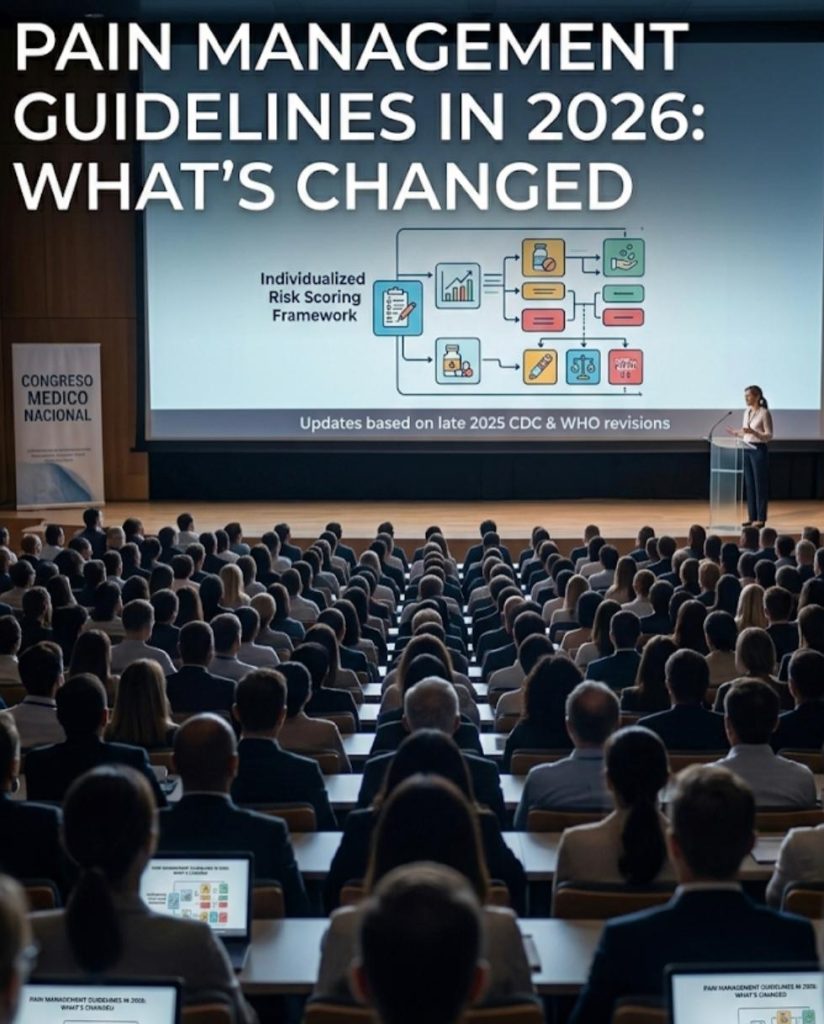
The way clinicians approach moderate-to-severe pain has shifted noticeably over the past two years. Updated CDC and WHO analgesic ladder revisions, published in late 2025, now place more emphasis on individualized risk scoring before prescribing anything beyond first-line agents, rather than the older one-size-fits-all step-up model.
Why the Update Matters for Patients
In practice, this means physicians are now expected to document a clear rationale imaging results, pain duration, functional impact before moving a patient off acetaminophen or NSAIDs. It’s a more cautious system, but also a more transparent one. Patients are asking sharper questions, and frankly, they deserve sharper answers.
The Data Behind the Shift
A 2025 meta-analysis in The Lancet Rheumatology found that nearly 30% of adults with chronic musculoskeletal pain were still relying solely on over-the-counter NSAIDs a full year after their pain became “moderate to severe” by clinical scoring despite guidelines recommending reassessment within 4–6 weeks. That statistic alone tells you the escalation conversation isn’t happening fast enough in primary care settings.
Understanding Why Standard Painkillers Stop Working
Every analgesic has a ceiling. This is the concept patients least expect and most need explained clearly.While managing systemic symptoms like chronic Candida requires targeted clinical protocols, addressing the associated physical discomfort often aligns with updated 2026 pain management guidelines.”

Acetaminophen and NSAIDs like ibuprofen or naproxen operate on a dose-response curve that flattens out. Once you hit the maximum recommended daily dose, taking more doesn’t produce more relief it only increases the risk of liver toxicity (with acetaminophen) or gastrointestinal bleeding and kidney strain (with NSAIDs). I’ve seen well-meaning patients quietly double their ibuprofen dose out of desperation, unaware they’d already crossed into a zone offering zero additional benefit and real organ risk.
Tolerance Versus Undertreated Pain
There’s a difference between the body “getting used to” a drug and the underlying condition simply outpacing the drug’s capacity. Genuine pharmacological tolerance to NSAIDs is rare; what’s far more common is disease progression arthritis worsening, a disc herniation compressing further, post-surgical inflammation not resolving on schedule. Mistaking one for the other leads patients to cycle through OTC brands hoping for a different result, when what’s actually needed is a reassessment of the diagnosis itself.
Red Flags That Signal It’s Time to Escalate
- Pain persisting past the expected healing window (generally 2–4 weeks for soft tissue injury)
- Pain disrupting sleep on more than three nights per week
- Functional decline skipping work, mobility aids needed, avoiding stairs
- Any pain accompanied by fever, unexplained weight loss, or numbness
The Next Step: Prescription-Strength Options
When OTC medication is genuinely maxed out, physicians typically consider a small number of well-studied categories rather than jumping straight to the strongest available option.
Non-Opioid Prescription Adjuncts
Muscle relaxants, low-dose antidepressants (duloxetine is commonly used off-label for chronic musculoskeletal pain), and anticonvulsants like gabapentin for nerve-related pain often get tried before opioid-class medications, particularly for chronic (non-cancer) pain.
Moderate Opioid Agonists
For pain that is acute, moderate-to-severe, and expected to be time-limited post-operative recovery, significant orthopedic injury, dental surgery physicians frequently reach for a moderate-potency option that balances effectiveness against the higher dependency risk carried by stronger opioids like oxycodone or morphine.
Comparative Table: Escalation Pathway Overview
| Pain Category | First-Line OTC | Common Prescription Step-Up | Primary Consideration |
|---|---|---|---|
| Mild (1–3/10) | Acetaminophen, ibuprofen | Rarely needed | Dosing limits, GI/liver monitoring |
| Moderate (4–6/10) | NSAID combinations | Tramadol, low-dose codeine | Dependency risk, drug interactions |
| Severe (7–10/10), acute | N/A alone | Tramadol, short-course oxycodone | Short duration, close follow-up |
| Chronic neuropathic | N/A alone | Gabapentinoids, duloxetine | Slow titration, side-effect tolerance |
A Closer Look at Tramadol as a Treatment Bridge
Among moderate-potency prescription analgesics, tramadol occupies a specific niche that’s worth understanding clearly rather than fearing or dismissing outright.
How It Differs Pharmacologically
Tramadol works through a dual mechanism mild opioid receptor activity combined with serotonin-norepinephrine reuptake inhibition which is why it’s often positioned a step below full opioid agonists on the pain ladder, while still requiring the same level of prescribing caution around interactions, particularly with SSRIs or MAOIs, where serotonin syndrome becomes a genuine concern.
Getting a Legitimate Supply
If a physician determines tramadol is appropriate for your situation, the next question patients ask is practical: where and how to fill that prescription safely. This is genuinely one of the most important safety conversations in modern pharmacology, because counterfeit and unregulated medication sales have grown substantially online. Patients looking to buy tramadol online, purchase tramadol for a documented prescription, or secure a supply for planned surgical recovery should only do so through licensed, accredited pharmacies that require a valid prescription and are verified through resources like the NABP’s Digital Pharmacy accreditation program or your state pharmacy board’s online directory.
Legitimate platforms will never offer to sell prescription tramadol without documentation, and any site advertising it “no prescription needed” should be treated as a hard stop. When you do need to acquire tramadol for a legitimate medical need, ask your prescribing physician for a pharmacy referral, or use your insurance provider’s verified network pharmacy list this single step eliminates the overwhelming majority of counterfeit-product risk documented by the FDA’s ongoing BeSafeRx initiative.
Why This Caution Isn’t Overkill
I’ve reviewed cases where patients, frustrated by pharmacy wait times or cost, turned to unverified international sellers. The tablets they received were inconsistently dosed some containing far more active ingredient than labeled. This isn’t a hypothetical risk; it’s documented in FDA import alerts on a near-monthly basis. Safe sourcing isn’t bureaucratic friction it’s the difference between predictable therapeutic effect and a genuine medical emergency.
Case Observations From Clinical Practice
Over years of working pain management case reviews, a few patterns repeat often enough to be worth sharing directly.
The Post-Surgical Patient Who Under-Treated Pain
One recurring scenario: a knee replacement patient, proud of “not wanting to become dependent,” rations prescribed pain medication and relies on ibuprofen alone during the critical first-week recovery window. The result almost every time is worse outcomes poor participation in physical therapy due to pain avoidance, slower range-of-motion recovery, and paradoxically, a longer overall recovery timeline than patients who followed the prescribed tapering schedule appropriately.
The Chronic Pain Patient Stuck in the OTC Loop
Another common pattern involves patients with degenerative disc disease who have quietly self-managed with maximum-dose NSAIDs for years, developing early-stage kidney function changes before ever raising the issue with a physician. By the time labs flagged it, the conversation about escalation was overdue by a long margin. This is precisely why routine bloodwork matters for anyone on long-term OTC analgesic regimens, not just prescription ones.
Non-Pharmacological Complements Worth Discussing
Medication escalation shouldn’t happen in isolation. The most durable pain outcomes I’ve observed combine pharmacology with structural changes to how pain is managed day-to-day.
Physical and Movement-Based Therapy
Targeted physical therapy, even short 15-minute daily mobility routines, measurably reduces reliance on rescue medication in patients with mechanical back and joint pain, according to 2025 outcomes data from orthopedic rehabilitation programs.
Cognitive and Behavioral Approaches
Pain-focused cognitive behavioral therapy (CBT) has strong evidence for chronic pain conditions specifically.
For localized pain a single problematic joint or nerve root corticosteroid injections, nerve blocks, or radiofrequency ablation can reduce or eliminate the need for daily oral medication entirely in appropriate candidates.
Risks, Side Effects, and Red Flags to Monitor
Escalating pain treatment always means escalating the conversation about safety monitoring.
Comparative Side Effect Table
| Medication Class | Common Side Effects | Serious Risk Signals | Monitoring Needed |
|---|---|---|---|
| NSAIDs (long-term) | GI upset, fluid retention | GI bleeding, kidney decline | Annual renal panel |
| Acetaminophen | Generally mild | Liver toxicity at high dose | Liver function if daily long-term |
| Tramadol | Nausea, dizziness, constipation | Seizure risk, serotonin syndrome | Med interaction review |
| Gabapentinoids | Drowsiness, weight gain | Respiratory depression (with opioids) | Dose titration schedule |
When Side Effects Mean Stop, Not Adjust
Confusion, unusually rapid heartbeat, difficulty breathing, or a rash accompanying any new medication warrants immediate medical contact not a “wait and see” approach, regardless of how effective the drug has been for pain control.
When to See a Specialist Rather Than Cycling Medications
If pain has persisted longer than six weeks despite appropriate OTC and initial prescription management, referral to a pain management specialist or the relevant specialist for the underlying condition (rheumatology, orthopedics, neurology) is the appropriate next step not another round of trying different brands off the pharmacy shelf.
Frequently Asked Questions
Q: When should I stop using over-the-counter painkillers and see a doctor?
A: You should see a doctor if pain persists longer than two to four weeks, disrupts your sleep multiple nights a week, or fails to respond to the maximum labeled dose of acetaminophen or NSAIDs, since continuing to self-treat beyond this point risks both organ damage and missing a progressing underlying condition.
Q: Is it safe to buy tramadol online for pain management?
A: It can be safe only when you buy tramadol online through a licensed, accredited pharmacy that requires a valid prescription, since unverified sellers frequently distribute counterfeit or inconsistently dosed tablets that carry serious health risks.
Q: What’s the difference between tramadol and stronger opioids like oxycodone?
A: Tramadol has a dual mechanism combining mild opioid activity with serotonin-norepinephrine effects and is generally considered lower-potency with a somewhat different risk profile than full opioid agonists like oxycodone, though it still requires careful prescribing and monitoring.
Q: Can long-term NSAID use cause permanent damage?
A: Yes, prolonged high-dose NSAID use is associated with irreversible kidney function decline and increased gastrointestinal bleeding risk, which is why annual kidney function monitoring is recommended for anyone using these medications regularly for more than a few months.
Q: Are non-drug treatments actually effective for moderate to severe pain?
A: Yes, physical therapy, cognitive behavioral therapy, and interventional procedures like targeted injections have strong clinical evidence for reducing pain and medication dependence, particularly when combined with appropriate pharmacological treatment rather than used as a standalone substitute.