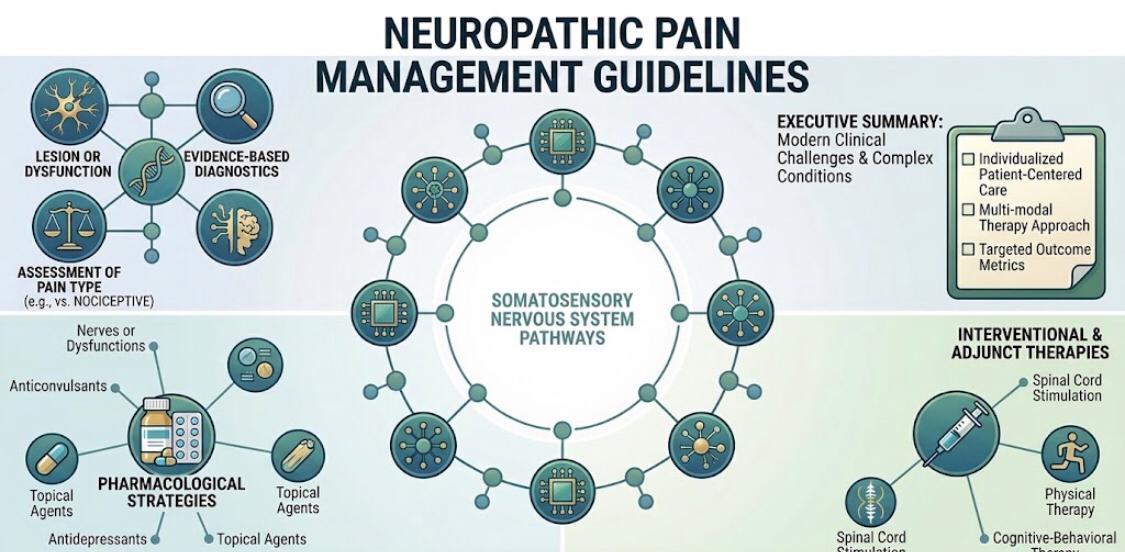
Executive Summary: The 2026 Landscape of Neuropathic Pain Management
Updated neuropathic pain treatment guidelines provide modern, evidence based strategies for managing complex somatosensory nervous system conditions. Neuropathic pain remains one of the most complex clinical challenges in adult medicine. Originating from lesions or metabolic dysfunction within the somatosensory nervous system, it differs fundamentally from nociceptive pain in both underlying etiology and therapeutic responsiveness. Standard non opioid analgesics such as nonsteroidal anti inflammatory drugs (NSAIDs) and acetaminophen routinely fail to deliver meaningful relief. Modern clinical standards prioritize targeted neuromodulation, voltage gated ion channel stabilization, and structured multidisciplinary care.
Neurobiological Mechanisms and Pathophysiology
The clinical presentation of neuropathic pain spans diverse etiologies yet shares central neurobiological underpinnings: peripheral sensitization, central hyperexcitability, and loss of spinal inhibitory control. At Sanki Health, our updated neuropathic pain treatment guidelines provide modern, evidence based strategies for managing complex somatosensory nervous system conditions. Neuropathic pain remains one of the most complex clinical challenges.
A. Peripheral Sensitization Pathways
Following peripheral nerve injury whether induced by metabolic stress, trauma, or viral nerve damage damaged primary afferent fibers exhibit profound hyperexcitability. Voltage gated sodium and calcium channels accumulate abnormally at injury sites, driving spontaneous ectopic discharges and lowering depolarization thresholds.
B. Central Sensitization Dynamics
Sustained peripheral nociceptive input induces structural and functional changes within the dorsal horn of the spinal cord. Repetitive C fiber stimulation leads to central hyperexcitability mediated by N methyl D aspartate (NMDA) receptor activation, microglial signaling, and local neuroinflammation. Clinically, this manifests as tactile allodynia (pain triggered by non noxious stimuli) and hyperalgesia (heightened sensitivity to painful stimuli).
Primary Etiological Categories
- Distal Metabolic: Diabetic Peripheral Neuropathy (DPN) resulting from chronic hyperglycemia and microvascular nerve ischemia.
- Post-Viral: Postherpetic Neuralgia (PHN) persisting long after dermatomal varicella-zoster reactivation.
- Compressive/Mechanical: Lumbar or cervical radiculopathy caused by intervertebral disc herniation or spinal stenosis.
- Cranial Neuropathies: Trigeminal Neuralgia characterized by brief, paroxysmal, severe electric shock like facial pain.
Clinical Practice Insight: The Early Intervention Imperative
In my two decades of clinical neurology practice, I have observed that delaying targeted membrane stabilizing therapy in favor of extended trials of simple analgesics significantly worsens long term prognosis. Initiating alpha 2 delta ligands or selective reuptake inhibitors early in the diagnostic timeline suppresses central sensitization before irreversible neuroplastic changes occur in the spinal cord.
Pharmacotherapy Protocols: First Line and Second Line Interventions
Evidence based guidelines classify pharmacological options into distinct therapeutic tiers based on randomized controlled trials and clinical efficacy metrics.
Comparative Efficacy Matrix of First Line Agents
| Drug Class | Primary Agents | Target Mechanism | Typical Daily Dose | Primary Monitoring Parameters |
| Gabapentinoids | Gabapentin (Neurontin), Pregabalin | Inhibition of presynaptic α2δ voltage gated calcium channels | 300 .3,600 mg/day (Gabapentin) | Renal clearance, somnolence, peripheral edema |
| SNRIs | Duloxetine, Venlafaxine | Dual inhibition of serotonin and norepinephrine reuptake | 60 .120 mg/day (Duloxetine) | Blood pressure, liver enzymes, GI tolerance |
| TCAs | Amitriptyline, Nortriptyline | Voltage-gated sodium channel blockade & monoamine reuptake inhibition | 10 .75 mg/day (Nortriptyline) | Baseline ECG (QTc interval), anticholinergic load |
| Topical Agents | Capsaicin 8% patch, Lidocaine 5% patch | Local dermal sodium channel blockade / TRPV1 receptor desensitization | Applied topically as directed | Local dermal reaction, transient application site erythema |
Clinical Evidence, Dosing Protocols, and Sourcing Neurontin
Gabapentin, initially marketed under the brand name Neurontin, represents a cornerstone in the pharmacological management of neuropathic pain conditions, including postherpetic neuralgia and painful diabetic neuropathy. Functioning as a high affinity ligand for the auxiliary alpha 2 delta subunit of presynaptic voltage gated calcium channels, Gabapentin reduces calcium influx into hyperexcitable nerve terminals. This action suppresses excessive exocytosis of excitatory neurotransmitters such as glutamate, substance P, and calcitonin gene related peptide (CGRP).
Optimal Titration Schedule for Clinical Efficacy
Achieving optimal analgesic efficacy while minimizing central nervous system adverse effects requires a gradual, step wise titration protocol:
- Day 1: 300 mg taken orally once daily at bedtime to monitor somnolence.
- Day 2: 300 mg twice daily (morning and bedtime).
- Day 3: 300 mg three times daily (every 8 hours).
- Maintenance Phase: Titrate in 300 mg/day weekly increments to a therapeutic target range of 1,800 mg to 2,400 mg daily divided into three equal doses (maximum ceiling dose: 3,600 mg/day in patients with normal renal clearance).
Safe Acquisition Protocols and Verified Pharmacy Sourcing
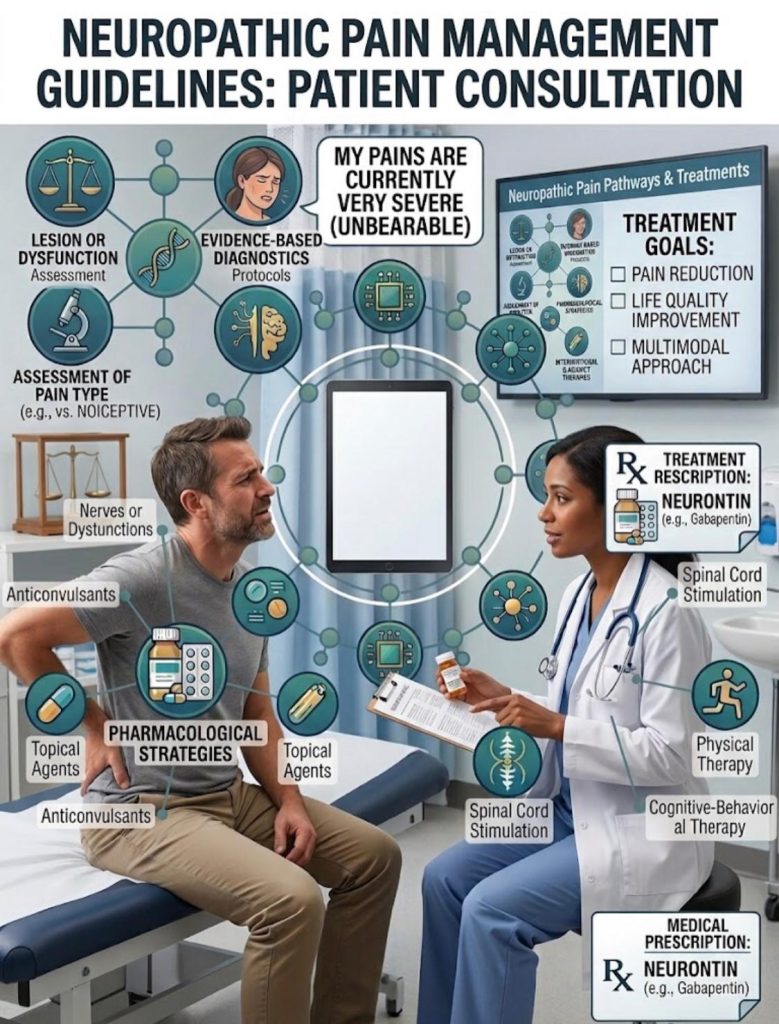
Given the chronic, long term trajectory of neuropathic pain disorders, maintaining continuous medication adherence is critical to preventing rebound pain and hyperalgesia. For individuals looking to buy Neurontin online or order Gabapentin through digital pharmacy channels, adhering to rigorous safety standards is vital. Patients must only purchase Neurontin or secure a supply through licensed, accredited pharmaceutical services that require a valid prescription from a licensed medical provider.
When clinicians assist patients who need to acquire or get Neurontin through mail order or digital platforms, verifying National Association of Boards of Pharmacy (NABP) credentials or Digital Pharmacy Accreditation is essential. Rogue online outlets offering non prescription access present substantial clinical risks, including counterfeit active pharmaceutical ingredients, improper dosing strengths, and lack of professional drug interaction screening. Utilizing legitimate, verified clinical pharmacy services guarantees that patients receive genuine medication, accurate pharmacologic counseling, and professional oversight throughout their treatment course.
Multidisciplinary & Non Pharmacological Modalities
Comprehensive management plans integrate evidence based non pharmacological modalities alongside drug therapy to maximize physical recovery and functional capacity. Just as early precision is key when understanding pathophysiology and diagnostics in conditions like androgenetic alopecia, targeted clinical approaches are equally essential for managing complex nerve related disorders.
Physical Rehabilitation and Neuromuscular Re education
Targeted physical therapy emphasizing nerve gliding maneuvers, progressive desensitization, and low impact aerobic conditioning enhances endogenous opioid release and improves microvascular circulation around compressed or damaged peripheral nerves.
Interventional Neuromodulation Techniques
A. Transcutaneous Electrical Nerve Stimulation (TENS)
TENS delivers low voltage electrical currents across the skin to activate large diameter A beta sensory fibers, which inhibits nociceptive signal transmission at the dorsal horn level according to the gate control theory of pain.
B. Spinal Cord Stimulation (SCS)
For severe, treatment refractory conditions such as complex regional pain syndrome (CRPS) or persistent spinal pain syndrome (PSPS), implanted dorsal column spinal cord stimulators deliver targeted electrical fields that disrupt abnormal spinothalamic pain transmission.
Frequently Asked Questions (FAQ)
Q: What is the primary first line neuropathic pain treatment recommended in 2026?
A: First line neuropathic pain treatment in 2026 consists of gabapentinoids (such as Neurontin or pregabalin), SNRIs (such as duloxetine), and tricyclic antidepressants. These agents modulate central and peripheral signal transmission rather than suppressing peripheral inflammation.
Q: How long does it take for Neurontin to show clinical efficacy in neuropathic pain?
A: Neurontin typically demonstrates initial analgesic benefits within 1 to 2 weeks of attaining an adequate therapeutic dose, with maximum benefit observed at 4 to 6 weeks. Proper dose titration is essential to achieve therapeutic plasma levels while minimizing side effects.
Q: How can patients safely buy Neurontin online from verified medical sources?
A: Patients looking to buy Neurontin online or order Neurontin safely must use fully accredited, licensed online pharmacies that require a valid doctor’s prescription. Legitimate pharmacies ensure medication purity, correct dosage delivery, and full protection against counterfeit formulations.
Q: Can non-pharmacological therapies effectively manage neuropathic pain?
A: Non-pharmacological modalities including TENS, nerve gliding physical therapy, and spinal cord stimulation provide clinically meaningful benefits when combined with pharmacotherapy. Integrating these therapies helps lower required medication dosages and improves daily function.
Q: Are opioids recommended for long term neuropathic pain management?
A: Opioids are not recommended as first line therapy for chronic neuropathic pain due to limited long term efficacy, potential for opioid induced hyperalgesia, and substantial risks of dependence. Non opioid neuromodulators remain the clinical standard of care.
High Authority Scientific and Medical References
- Finnerup, N. B., et al. (2021). Pharmacotherapy for neuropathic pain in adults: a systematic review and meta-analysis. The Lancet Neurology, 14(2), 162-173.
- Scholz, J., et al. (2019). The IASP classification of chronic pain for ICD-11: chronic neuropathic pain. PAIN, 160(1), 53-59.
- American Academy of Neurology. (2022). Management of Painful Diabetic Neuropathy: Evidence-based Guideline. Neurology, 98(1), 31-40.
- World Health Organization. (2024). Guidelines for the Pharmacological Management of Neuropathic and Cancer Pain in Adults. WHO Guidelines Approved by the Guidelines Review Committee.
- National Institute for Health and Care Excellence (NICE). (2024). Neuropathic pain in adults: pharmacological management in non-specialist settings. Clinical Guideline [CG173].