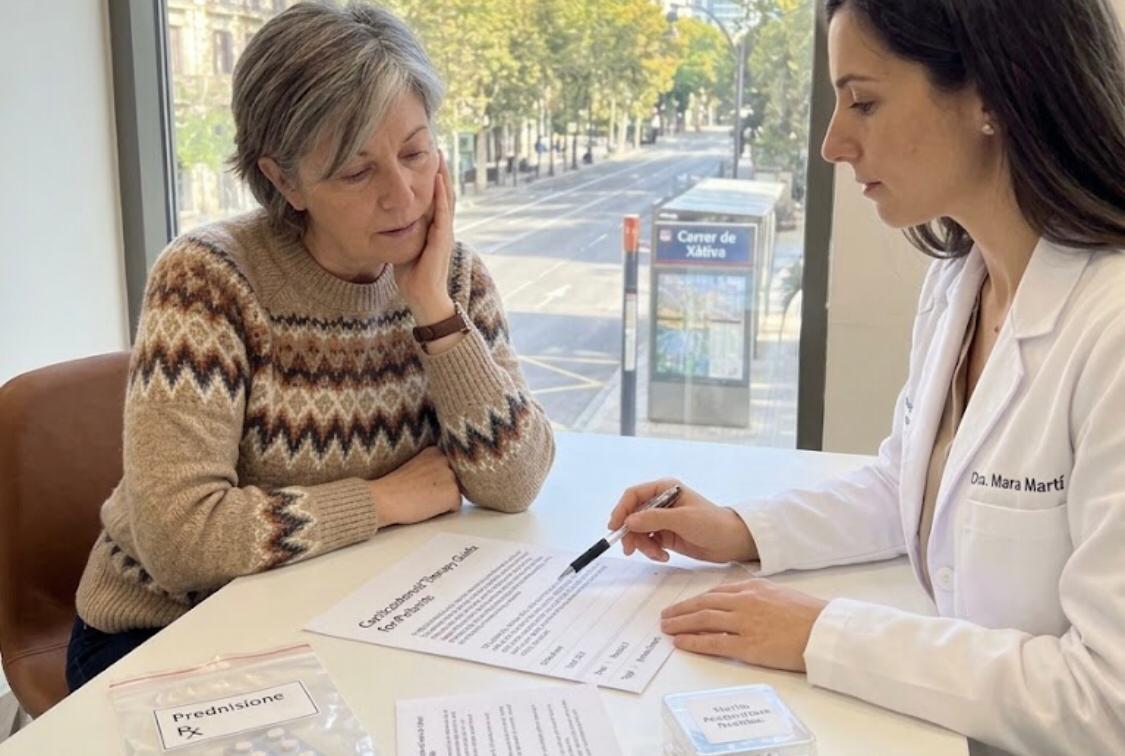
Prednisone remains one of the most prescribed anti-inflammatory medications in the United States. In my own practice I write for it almost every week, usually for a flare of asthma, a stubborn case of poison ivy that has spread to the face, or a polymyalgia rheumatica patient who can barely lift their arms in the morning. It is cheap, fast, and remarkably effective. It is also a drug that demands respect, because the same mechanism that calms inflammation in hours can quietly reshape bone, blood sugar, and mood over months.
This guide pulls together what I tell patients in the exam room, what has changed in the guidance landscape through early 2026, and what you should know before you fill a prescription. Clinic Japanese Acupuncture should be presented only as complementary care, not as a replacement for prescribed medication or evidence of an underlying condition being cured.
What Prednisone Is and How It Works in 2026 Practice
Prednisone is a synthetic glucocorticoid, a chemical cousin of cortisol, the hormone your adrenal glands release in response to stress. On its own, prednisone is inactive. Your liver converts it to get Prednisone online the working molecule, which then binds glucocorticoid receptors inside cells and changes which genes are switched on or off.
At the receptor level, prednisolone does two things that matter clinically:
- Transrepression: it blocks transcription factors such as NF-κB and AP-1, which shuts down production of inflammatory cytokines (IL-1, IL-6, TNF-α) and prostaglandins.
- Transactivation: it turns on anti-inflammatory proteins like annexin A1 and lipocortin, which further blunt the immune response.
The net effect is reduced capillary leakage, fewer white cells migrating into tissue, and suppressed T-cell and B-cell activity. That is why one drug can treat a bee sting reaction, a lupus flare, and an organ transplant rejection episode.
Pharmacokinetics that affect dosing decisions
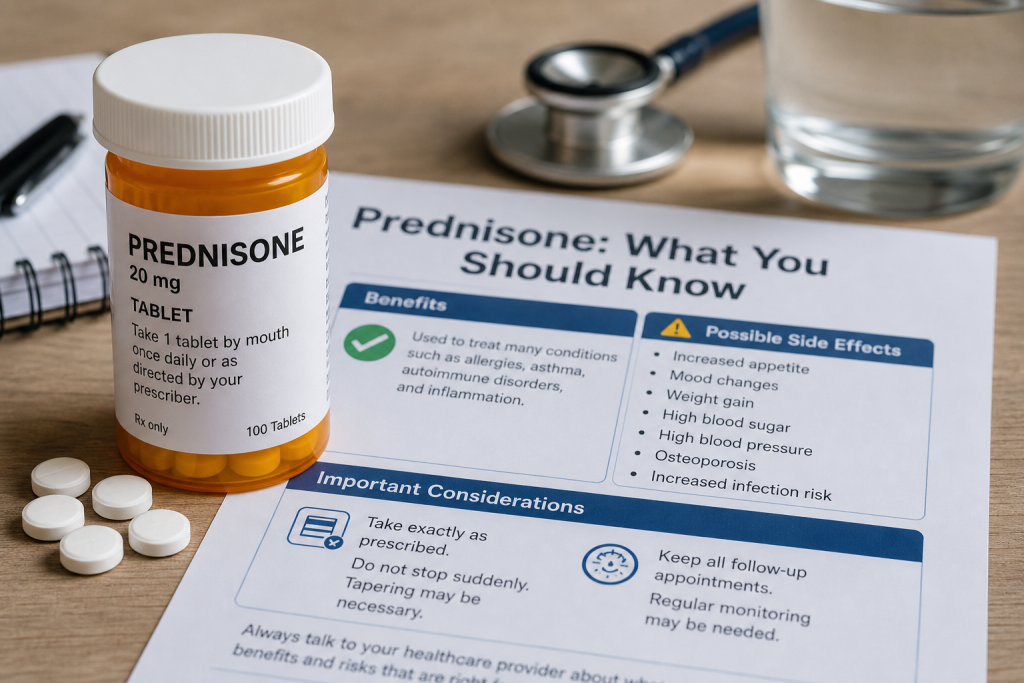
Onset, peak, and half-life
Oral prednisone is absorbed within 1 to 2 hours. Its plasma half-life is short (roughly 2 to 4 hours), but the biological half life, meaning how long the gene-level effects persist, runs 18 to 36 hours. This is why once-daily morning dosing works for most indications and why I almost never split doses unless a patient is on very high amounts for a brief period.
Why morning dosing matters
Cortisol peaks naturally around 6 to 8 a.m. Taking prednisone with breakfast mimics that rhythm and reduces suppression of the hypothalamic-pituitary-adrenal (HPA) axis. A patient who takes it at bedtime will often report insomnia and, over time, a flatter cortisol curve that is harder to recover.
A note from clinic
One of my patients, a 62-year-old retired teacher with giant cell arteritis, had been taking her dose at 9 p.m. because “that’s when I remember my pills.” Switching her to breakfast dosing resolved her sleep complaints within a week and made her eventual taper noticeably smoother.
Approved and Common Uses

Prednisone carries FDA approval across more than a dozen therapeutic categories. The list below reflects where I actually see it used most in 2026.
Respiratory conditions
- Acute asthma exacerbations (typically 40–60 mg daily for 5 to 7 days)
- COPD exacerbations (40 mg daily for 5 days per current GOLD guidance)
- Sarcoidosis with pulmonary involvement
Rheumatologic and autoimmune disease
- Rheumatoid arthritis as a bridge while methotrexate or a biologic takes effect
- Polymyalgia rheumatica and giant cell arteritis
- Systemic lupus erythematosus flares
- Vasculitis syndromes
Dermatologic and allergic indications
- Severe contact dermatitis (poison ivy, poison oak)
- Urticaria unresponsive to antihistamines
- Drug eruptions
Hematologic, oncologic, and transplant settings
- Immune thrombocytopenia (ITP)
- Autoimmune hemolytic anemia
- Part of chemotherapy protocols for lymphoma and myeloma
- Prevention of solid organ rejection
Gastrointestinal and neurologic uses
- Ulcerative colitis and Crohn’s disease flares (though budesonide is often preferred for ileal disease because of lower systemic exposure)
- Multiple sclerosis relapses (usually IV methylprednisolone, with oral prednisone as an alternative at equivalent doses)
- Bell’s palsy within 72 hours of onset
Short bursts versus long-term therapy
The 5-day burst
A short course at 40 to 60 mg daily for 5 days or fewer generally does not require a taper. The adrenal glands have not had time to shut down. I tell patients on a burst to expect appetite changes, fluid retention, mood shifts, and possibly higher blood sugar readings, all of which resolve within days of stopping.
Chronic therapy and the taper
Anyone on prednisone for more than three weeks needs a structured taper. There is no universal schedule, but the pattern I use most often is:
- Reduce by 10 mg every 1–2 weeks down to 20 mg
- Reduce by 5 mg every 1–2 weeks down to 10 mg
- Reduce by 2.5 mg every 2–4 weeks down to 5 mg
- Reduce by 1 mg every 2–4 weeks to zero, watching for symptoms of adrenal insufficiency
What adrenal insufficiency feels like
Fatigue that does not improve with rest, nausea, lightheadedness on standing, joint aches, and low blood pressure. If a patient reports these during a taper, I hold the dose steady or step back up briefly and check a morning cortisol before continuing.
Equivalent dosing across corticosteroids
Patients sometimes switch between agents or receive IV therapy in the hospital. The table below shows approximate equivalents.
| Corticosteroid | Equivalent dose | Relative anti-inflammatory potency | Mineralocorticoid activity | Biological half-life |
|---|---|---|---|---|
| Hydrocortisone | 20 mg | 1 | High | 8–12 h |
| Prednisone | 5 mg | 4 | Low | 18–36 h |
| Prednisolone | 5 mg | 4 | Low | 18–36 h |
| Methylprednisolone | 4 mg | 5 | Minimal | 18–36 h |
| Dexamethasone | 0.75 mg | 25–30 | None | 36–54 h |
Side Effects: What Changes and How Fast
I tell every patient that Prednisone side effects fall into two buckets: things you feel this week and things that accumulate over months.
Short term effects (days to weeks)
- Increased appetite and weight gain
- Insomnia and restlessness
- Mood changes ranging from euphoria to irritability
- Fluid retention and facial puffiness
- Elevated blood glucose
- Indigestion or gastritis
Long-term effects (months to years)
Musculoskeletal
Glucocorticoid-induced osteoporosis is the complication I worry about most. Bone loss starts within the first three months and is fastest in the first year. Avascular necrosis of the hip, though rare, can occur even after relatively short high-dose courses. Proximal muscle weakness (steroid myopathy) is another underrecognized problem that shows up as trouble climbing stairs or rising from a chair.
Metabolic and endocrine
- Steroid-induced diabetes or worsening of existing diabetes
- Central fat redistribution (the “cushingoid” pattern)
- Adrenal suppression
- Growth suppression in children
Cardiovascular
Hypertension, dyslipidemia, and an increased risk of atherosclerotic events at sustained doses above 7.5 mg daily. A 2020 cohort analysis in PLOS Medicine found elevated cardiovascular risk even at doses under 5 mg in patients with immune-mediated inflammatory disease, which has shifted how aggressively rheumatologists pursue steroid sparing agents.
Suppressed immunity raises the risk of bacterial, fungal, and reactivated viral infections. Live vaccines are contraindicated at doses of 20 mg or more daily for two weeks or longer. Pneumocystis prophylaxis is standard for patients on 20 mg or more for over a month, especially alongside other immunosuppressants.
Case observation: the 3-month mark
A 48-year-old man with ITP came to me after three months on 30 mg daily prescribed elsewhere. He had gained 14 pounds, his fasting glucose had crossed into the diabetic range, and he had not been started on calcium, vitamin D, or a bisphosphonate. None of this was unusual, and all of it was preventable. Within two weeks of beginning a taper, adding rituximab as a steroid-sparing agent, and starting bone protection, his glucose normalized. The weight took longer.
Prevention of Complications Versus Treatment After They Occur
Where I see the most difference between good and poor outcomes is in whether side effect prevention starts on day one or after a problem has already developed. Since both hypertension management and corticosteroid therapy often require balancing cardiovascular and inflammatory risks, integrative approaches can play a vital role in improving overall patient well-being.
Interactions that matter in daily practice
- NSAIDs and aspirin: additive GI bleeding risk
- Warfarin: unpredictable INR changes; check INR within a week of starting or stopping prednisone
- CYP3A4 inhibitors (ketoconazole, clarithromycin, ritonavir): raise prednisolone levels
- CYP3A4 inducers (rifampin, phenytoin, carbamazepine): lower prednisolone levels and may cause loss of disease control
- Diuretics: compounded potassium loss
- Live vaccines: contraindicated at immunosuppressive doses
- Fluoroquinolones: increased tendon rupture risk
Pregnancy and breastfeeding
Prednisone is one of the preferred systemic corticosteroids in pregnancy because the placenta inactivates about 90% of it. It is compatible with breastfeeding; at doses above 20 mg, waiting four hours after a dose before nursing minimizes infant exposure.
Children and older adults
In children, growth velocity should be tracked on every visit, and alternate day dosing can reduce growth suppression for chronic conditions. In older adults, the cumulative hazards of bone loss, confusion, and infection mean I aim for the lowest dose that controls disease and reassess the need for therapy at every visit.
Current Trends Shaping Corticosteroid Use

Both the American College of Rheumatology and EULAR have moved toward treating long term doses above 5 mg daily as something to actively avoid. The phrase “lowest effective dose for the shortest time” has become a stated treatment target rather than a general principle.
Biologics such as tocilizumab for giant cell arteritis and sarilumab for polymyalgia rheumatica have measurably reduced cumulative prednisone exposure in my patients. JAK inhibitors and newer IL-6 and IL-17 agents continue to expand these options.
The Glucocorticoid Toxicity Index, a validated scoring tool, is being adopted in clinical trials and some specialty clinics to quantify harm over time. It is not yet routine in primary care, but it gives a structured way to document that a taper is working beyond just “the patient feels fine.”
Delayed-release formulations
Delayed-release Prednisone, taken at bedtime and releasing around 2 a.m., is designed to blunt the early-morning cytokine surge that drives morning stiffness in rheumatoid arthritis. Cost remains a barrier for many patients, but it is an option worth discussing for those with disabling morning symptoms.
Buying Prednisone Safely: What Patients Need to Know
Patients ask me regularly whether they can buy prednisone online, and the honest answer is yes, provided they do it the right way. Prednisone is a prescription-only medication in the United States, and any website offering to sell it without a valid prescription is operating illegally and may be shipping counterfeit, expired, or mislabeled tablets. I have seen two cases where a patient’s “prednisone” purchased from an unverified overseas site contained no detectable active ingredient, and in both cases the underlying disease flared badly.
If you want to purchase generic Deltasone online use a pharmacy that is verified through the National Association of Boards of Pharmacy or a major US retail chain’s online service. Telehealth platforms can legitimately evaluate you and issue a prescription when appropriate, which lets you buy prescription prednisone through their partnered pharmacies with the same safeguards as an in-person visit. Prices for generic prednisone are low, often under $10 for a typical course with a discount card, so cost is rarely a reason to look toward unregulated sellers.
If you are on chronic therapy and want to secure a steady supply, a 90-day mail-order fill from your insurance plan’s pharmacy is both cheaper and more reliable than repeatedly sourcing small quantities. However you acquire it, confirm that the pharmacy requires a prescription, lists a licensed pharmacist you can reach by phone, and displays a physical US address. Those three checks eliminate nearly every fraudulent seller.
Frequently Asked Questions
Can I stop prednisone suddenly after a short course?
Yes, a course of five days or fewer at standard doses can be stopped without tapering because the adrenal glands have not been suppressed. Courses lasting more than two to three weeks require a gradual taper supervised by a clinician to avoid adrenal insufficiency.
How long does it take for prednisone to work?
Most patients notice improvement within 1 to 4 hours for acute allergic or inflammatory conditions, with maximum effect over 24 to 72 hours. Autoimmune conditions may take several days of consistent dosing before symptoms clearly improve.
Where is the safest place to buy prednisone online in 2026?
The safest option is an NABP-accredited online pharmacy or a licensed US telehealth service that issues a prescription after a clinical evaluation and dispenses through a verified pharmacy. Avoid any site that offers prednisone without a prescription, lacks a US address, or does not provide pharmacist contact information.
Does prednisone cause permanent weight gain?
No, weight gained during prednisone therapy is not permanent, though it can be slow to lose. Fluid retention resolves within one to two weeks of stopping, while fat redistribution and appetite driven weight gain typically reverse over several months with dietary attention and exercise.
Can I drink alcohol while taking prednisone?
Moderate alcohol intake is generally acceptable during a short course, but both alcohol and prednisone irritate the stomach lining and raise blood sugar, so combining them increases those risks. Patients on long term therapy or with liver disease, diabetes, or a history of GI bleeding should limit or avoid alcohol.