Introduction: Addressing Alcohol Use Disorder in Modern Medicine
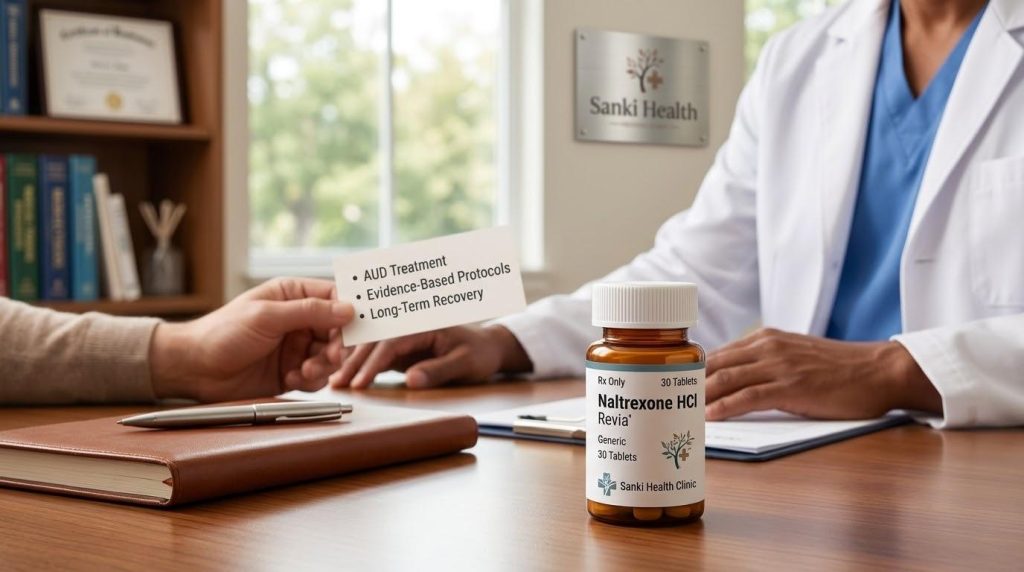
Alcohol use disorder remains one of the most prevalent substance related conditions worldwide, affecting millions of individuals across diverse demographics. As we navigate through 2026, the therapeutic landscape for AUD has evolved considerably, with pharmacological interventions playing an increasingly central role in comprehensive treatment protocols. Among the FDA approved medications for alcohol dependence, Revia hydrochloride stands as a cornerstone therapy, supported by decades of clinical research and real world application. At Sanki Health alcohol dependency treatment is carried out by combining modern evidence based medicine with personalized pharmacological approaches.
Key Approaches:
- Pharmacotherapy: Utilizing FDA-approved effective medications (such as Revia / Naltrexone) that block the euphoric effects of alcohol and reduce the urge to consume it.
- Clinical Supervision: Each patient receives professional support to ensure safe detoxification and continuous monitoring of liver and overall health.
- Long term Recovery: Treatment programs are aimed at preventing relapse and achieving sustainable long term recovery.
Throughout my clinical practice spanning multiple treatment settings, I have witnessed firsthand the transformative potential of medication assisted treatment when integrated thoughtfully into individualized recovery plans. The neurobiological mechanisms underlying addiction have become increasingly well characterized, allowing clinicians to deploy targeted pharmacotherapy with greater precision and confidence. This article synthesizes current evidence, clinical experience, and emerging 2026 research to provide healthcare professionals and informed patients with a comprehensive understanding of naltrexone’s role in alcohol dependence management.
Comparative Effectiveness Research
Direct comparison studies have yielded nuanced findings regarding differential efficacy of available AUD pharmacotherapies. While acamprosate demonstrates stronger effects on maintaining complete abstinence in fully detoxified individuals, Revia appears superior for harm reduction approaches focused on decreasing heavy drinking episodes among patients who continue consuming alcohol. In clinical practice, patient selection based on treatment goals and drinking patterns optimizes outcomes.

Long acting injectable naltrexone, administered monthly as an intramuscular depot formulation, addresses medication adherence challenges inherent to daily oral dosing. Comparative effectiveness research through 2026 suggests that while oral and injectable formulations demonstrate similar efficacy under ideal adherence conditions, real world outcomes favor injectable preparations due to guaranteed medication delivery and elimination of daily decision making about pill taking. Through years of clinical observation, certain patient characteristics appear to predict favorable naltrexone response. Individuals with strong family histories of alcoholism, those who report high subjective reward from drinking, and patients endorsing significant craving intensity tend to derive particular benefit. Contingency management, which provides tangible reinforcement for biochemically verified abstinence or medication adherence, represents an evidence based adjunct to Revia treatment. CM protocols might reward documented Revia ingestion or alcohol negative breathalyzer readings.
Special Populations and Clinical Considerations
Given naltrexone’s hepatic metabolism and early hepatotoxicity concerns, patients with pre-existing liver disease require individualized assessment. Those with compensated cirrhosis can typically receive standard dosing with enhanced monitoring, while decompensated disease represents a relative or absolute contraindication depending on severity. In practice, alternative agents such as acamprosate may be preferred in advanced liver disease.
Revia is classified as FDA Pregnancy Category C, indicating animal reproduction studies have shown adverse effects but adequate human studies are lacking. The risks of continued heavy drinking during pregnancy fetal alcohol spectrum disorders, growth restriction, neurodevelopmental impairment often outweigh theoretical medication risks. Individualized risk benefit discussion should involve obstetric consultation, with many specialists supporting naltrexone continuation in pregnant women with severe AUD who cannot maintain abstinence through non pharmacological means.
Major depressive disorder, anxiety disorders, and post traumatic stress disorder frequently co occur with AUD, presenting both challenges and opportunities for integrated treatment. Revia demonstrates safety when combined with selective serotonin reuptake inhibitors , serotonin norepinephrine reuptake inhibitors , and other psychiatric medications. Some evidence suggests that naltrexone may provide modest antidepressant effects through mechanisms independent of alcohol reduction, though primary mood disorders require dedicated pharmacotherapy.
Patients with bipolar disorder and comorbid AUD require mood stabilization as a treatment priority. Revia can be safely integrated into bipolar treatment regimens that include lithium, valproate, or second generation antipsychotics. Alcohol abstinence itself often improves mood stability.
Acquisition and Safe Access: Revia and Naltrexone Formulations
Revia hydrochloride is available in the United States under multiple brand names, with Revia representing one of the established oral formulations. As a prescription medication, Revia requires evaluation and authorization by a licensed healthcare provider qualified to diagnose and treat substance use disorders. This regulatory framework protects patient safety by ensuring appropriate candidate selection, contraindication screening, and ongoing monitoring.
In an era of expanding online pharmaceutical marketplaces, patients seeking to buy Revia online or purchase naltrexone must exercise caution to ensure medication authenticity and quality. Legitimate online pharmacy options exist through NABP-verified (National Association of Boards of Pharmacy) digital dispensing platforms that require valid prescriptions and employ licensed pharmacists for consultation. These verified services allow patients to order Revia conveniently while maintaining the safety standards of traditional brick and mortar pharmacies.
Attempting to acquire Revia from unlicensed international vendors or websites that do not require prescriptions poses serious health risks. Counterfeit medications may contain incorrect active ingredients, improper dosing, or dangerous contaminants. Beyond health hazards, get Revia online illegal sources potentially violates federal and state pharmaceutical regulations.
As of 2026, generic naltrexone formulations have substantially reduced medication costs compared to earlier years when only brand-name products were available. Most insurance plans, including Medicare and Medicaid, provide coverage for naltrexone as an evidence-based AUD treatment. Patients without insurance or those facing high copayments should inquire about manufacturer patient assistance programs, which may enable access to medication at reduced cost.
Patient Assistance and Discount Programs
When patients seek to get Revia but face financial barriers, several resources can help. Manufacturer copay cards, pharmacy discount program, and nonprofit patient assistance foundations frequently offer support for addiction medications. Healthcare providers should proactively discuss cost concerns and connect patients with financial counseling resources to prevent economic factors from impeding access to evidence based treatment.
For patients established on naltrexone therapy, maintaining medication continuity is essential for sustained benefit. Those who secure a supply through 90 day prescription fills or mail order pharmacy services often experience fewer treatment interruptions compared to monthly refill cycles. Healthcare systems should implement reminder systems and streamlined refill processes to support medication adherence, recognizing that even brief treatment gaps may trigger return to heavy drinkin
Case Illustration: Naltrexone in Harm Reduction

A 42 year old executive presented to my clinic after his primary care physician expressed concerns about elevated liver enzymes and reported alcohol consumption of 6-8 standard drinks nightly. Despite recognizing health consequences and relationship strain from his drinking, complete abstinence felt unattainable given work related social drinking expectations and personal ambivalence. We initiated naltrexone 50 mg daily alongside brief motivational enhancement therapy sessions.
Within three weeks, he reported spontaneous reduction to 2-3 drinks on drinking days, describing alcohol as less satisfying and noting decreased anticipatory craving. By three months, he had transitioned to 3-4 drinking days weekly, with liver enzymes normalizing. While abstinence might represent an optimal endpoint, the harm reduction achieved through Revia facilitated meaningful health improvement and sustained engagement in treatment.
Lessons on Treatment Retention
Medication adherence represents perhaps the greatest clinical challenge in AUD pharmacotherapy. Patients who experience early side effects, those with chaotic lifestyles, or individuals with limited insight into their condition frequently discontinue prematurely. Strategies I have found effective include:
- Proactive side effect management: Anticipating nausea and providing specific coping strategies
- Frequent early follow-up: Weekly contact during the first month to address concerns and reinforce commitment
- Simplified regimens: Considering extended release formulations for patients with adherence challenges
- Motivational interviewing techniques: Continuously revisiting and strengthening change motivation
- Family involvement: Engaging supportive family members in treatment planning when appropriate
The Role of Comprehensive Care Coordination
Isolated pharmacotherapy rarely succeeds without addressing co occurring mental health conditions, social determinants of health, and environmental triggers. The most successful outcomes I have witnessed occur when naltrexone is embedded within comprehensive care that includes psychiatric management, case management for housing or employment instability, family therapy when indicated, and connection to recovery community resources. Similar to our comprehensive protocols for neuropathic pain management, effective dependency recovery requires an evidence based, multi modal treatment approach tailored to the patient.
Patient Education and Shared Decision Making
1.Setting Realistic Expectations
Effective patient education begins with clarifying that naltrexone is not a “cure” for AUD but rather a tool that makes recovery more achievable by reducing neurobiological drives to drink. I emphasize that medication works best when combined with behavioral changes and that individual responses vary some patients experience dramatic craving reduction while others notice subtler effects requiring attentive self monitoring to appreciate.
2.Supporting Informed Treatment Choices
The decision to use medication for AUD should emerge through collaborative discussion weighing potential benefits against side effect risks, considering patient values and treatment goals. Some individuals strongly prefer abstinence based approaches and may find medications like naltrexone most helpful for preventing relapse. Others prioritize harm reduction and controlled drinking, contexts where naltrexone demonstrates particular utility.
3.Discussing the Pharmacological Mechanism
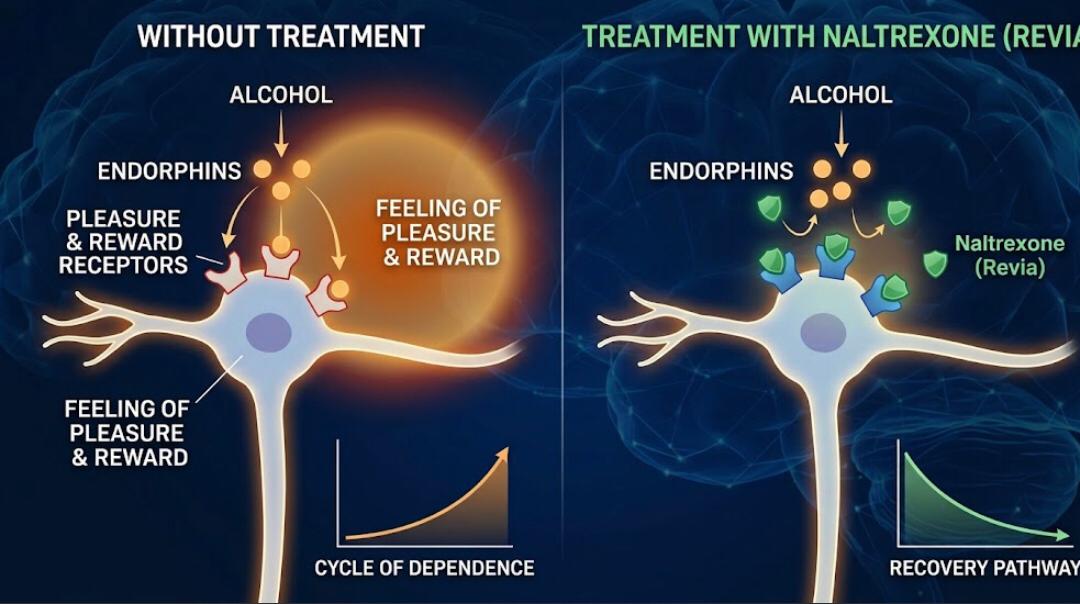
Many patients benefit from understanding how naltrexone works at a neurobiological level. I often explain: Alcohol triggers your brain’s reward system by releasing natural opioid chemicals that make drinking feel pleasurable. Naltrexone blocks the receptors where those chemicals work, so drinking doesn’t produce the same rewarding feeling. Over time, your brain learns that alcohol isn’t as satisfying, which reduces cravings and makes it easier to cut back or stop.
4.Quantifying Drinking Patterns
Objective tracking of alcohol consumption provides essential data for evaluating treatment response. I employ the Timeline Follow-Back method, asking patients to reconstruct daily drinking over the previous 30 days using calendar anchors and memory aids. This yields quantifiable metrics including total standard drinks, heavy drinking days, and percentage days abstinent.
Medication is the Easy Way Out
Persistent stigma frames medication assisted treatment as taking shortcuts rather than addressing addiction through willpower or spiritual transformation. This misconception fails to recognize AUD as a chronic medical condition with neurobiological underpinnings. I respond to such concerns by noting: “We wouldn’t criticize a diabetic for using insulin or someone with hypertension for taking blood pressure medication. Naltrexone corrects brain chemistry alterations caused by chronic alcohol exposure, giving you a fair chance at recovery.
Some patients and family members worry about replacing alcohol dependence with medication dependence. However, naltrexone lacks intoxicating effects. Furthermore, there is no withdrawal syndrome upon discontinuation. Its non-addictive pharmacology helps address these concerns. Therefore, Revia neither produces euphoria nor creates physical dependence, fundamentally distinguishing it from alcohol.
While some traditional recovery communities historically viewed all medications skeptically, mainstream addiction medicine now supports them. In addition, evidence-based approaches combine pharmacotherapy with therapy for the best results.
Current Landscape in Florida: Regional Considerations and Clinical Observations

Emerging Trends in Florida AUD Treatment Access 2026
Florida has witnessed significant evolution in substance use disorder treatment infrastructure over recent years. Expanded Medicaid coverage, increased telehealth utilization catalyzed by the COVID-19 pandemic and sustained through 2026, and growing integration of addiction services into primary care settings have improved naltrexone accessibility across the state. Nevertheless, disparities persist between urban centers like Miami, Tampa, and Jacksonville where specialty addiction medicine practices are concentrated and rural communities where treatment resources remain limited.
Legislative developments in 2025-2026 have strengthened parity enforcement, requiring insurance plans to cover FDA-approved AUD medications including naltrexone with prior authorization restrictions no more stringent than those applied to medications for other chronic conditions. This has reduced administrative barriers that previously impeded timely medication access.
Sanki Health Clinic Perspective: Integrating Evidence Based AUD Pharmacotherapy
At Sanki Health Clinic, we prioritize medication assisted treatment for alcohol use disorder. Combining pharmacotherapy with psychosocial support represents the standard of care. Our clinical protocols match patients with optimal treatment approaches. This includes naltrexone for harm reduction or acamprosate for established abstinence. Alternative agents are used for individuals with specific contraindications or comorbid conditions.
Customized Treatment Protocols in Florida
Florida’s demographic landscape requires thoughtful medication selection and monitoring. Extended release injectable naltrexone benefits patients with adherence challenges. It is also ideal for those preferring monthly clinic visits over daily pills. Systematic screening for hepatic impairment guides safe naltrexone prescribing. This is vital in populations with high rates of metabolic syndrome and hepatic steatosis.
Our integrated care model coordinates addiction medicine, primary care, and psychiatric services. Most patients with AUD present with co-occurring conditions requiring simultaneous management. As Florida continues expanding access to evidence-based treatment in 2026, Sanki Health Clinic remains committed to delivering comprehensive, patient-centered care. This approach improves outcomes and supports sustained recovery.
Conclusion: Optimizing Outcomes Through Evidence Based, Patient Centered Care
Alcohol use disorder remains a serious public health challenge affecting millions of Americans. It impacts individual health, family systems, and community well being. The availability of pharmacotherapies such as naltrexone hydrochloride represents a major advance. These tools address the neurobiological drivers of alcohol dependence. Clinical evidence, telehealth expansion, and policy reforms now create unprecedented opportunities to improve outcomes.
Successful treatment requires integrating pharmacotherapy with psychosocial interventions. Care plans must address co-occurring conditions and provide sustained support. Naltrexone blocks opioid mediated alcohol reinforcement, providing a foundation for behavioral changes. This supports patients whether pursuing abstinence or harm reduction. Adhering to evidence based practice meaningfully improves lives.
For patients considering treatment, the path forward begins with a comprehensive evaluation. A qualified healthcare provider can assess your specific situation and discuss available options, including naltrexone and alternative approaches. Together, you can develop an individualized care plan tailored to your recovery goals. Recovery is achievable, and effective help is available.